Have you ever heard about birds that vanished for decades and suddenly popped up again? They’re called “lost birds,” and their stories are like real-life treasure hunts! Let me tell you all about these amazing feathered friends that scientists thought might be gone forever.
What Does It Mean When a Bird Is “Lost”?
So, what exactly is a lost bird? It’s not like the bird got confused and couldn’t find its way home! A lost bird is one that scientists haven’t seen, photographed, or recorded for at least 10 years.
Right now, there are about 122 bird species on the lost birds list. That might sound like a lot, but here’s the cool part: Out of nearly 12,000 bird species in the world, only about 1% are lost! Scientists use something called the Search for Lost Birds program to keep track of them and try to find them again.
These birds aren’t declared extinct (which means completely gone forever). They’re just missing in action. And sometimes, after years or even more than a century, someone spots them again!
Why Do Birds Become Lost to Science?
You might be wondering, “How does a whole bird species just disappear?” Well, there are several reasons:
They Live in Really Hard-to-Reach Places
Many lost birds hang out in dense rainforests, on tiny remote islands, or way up in misty mountains where hardly anyone goes. Some of these places are so rugged and difficult to access that even experienced explorers have trouble getting there.
Their Homes Are Disappearing
When forests get cut down or turned into farms, birds lose their homes. They might move to even more hidden spots that are harder to find.
They’re Super Shy
Some birds are naturally secretive. They hide in thick bushes, only come out at certain times, or are just really good at avoiding people.
Not Enough People Looking
Some areas don’t have many bird watchers or scientists visiting regularly. If nobody’s looking, nobody’s finding!
The good news is that modern technology, such as camera traps, sound recorders, and citizen science apps like eBird, is making it easier to track and rediscover these mysterious birds.
Which Lost Birds Have Been Rediscovered Recently?
Here’s where things get really exciting! Let me introduce you to six amazing lost birds that have been found in recent years. Each one has its own incredible story of rediscovery.
1. Black-naped Pheasant-Pigeon (Otidiphaps insularis)
Years Lost: 140 years (last seen in 1882)
Found Again: September 2022
Location: Fergusson Island, Papua New Guinea
This is probably the most famous recent rediscovery. Imagine a bird that looks like a cross between a pigeon and a pheasant, that’s this guy! The Black-naped Pheasant-Pigeon has a cool tail that’s flat like a pheasant’s and shiny black feathers on its head.
For 140 years, nobody could find it. Scientists went to Fergusson Island in September 2022 and spent an entire month searching through rough, mountainous forests filled with mosquitoes and leeches. They almost gave up. On the last day of their trip, with less than 24 hours to go, they checked their camera traps one final time. And there it was. Walking right past the camera.
One of the scientists, Jordan Boersma, said finding it felt like discovering a unicorn. Local hunters in Papua New Guinea call this bird “Auwo,” and they helped the scientists figure out where to look. The team learned that the bird probably only lives in one small area of the island, which makes it extremely rare and in danger from logging companies.
2. Santa Marta Sabrewing (Campylopterus phainopeplus)
Years Lost: 12 years (last documented in 2010)
Found Again: July 2022
Location: Sierra Nevada de Santa Marta, Colombia
This hummingbird is absolutely gorgeous. The males have bright emerald-green feathers that shimmer in the light and an electric-blue throat that looks like someone painted it with the brightest marker ever. They also have a curved black bill that helps them sip nectar from flowers.
A bird watcher named Yurgen Vega was studying other birds in Colombia’s mountains when he spotted something that made him freeze. A hummingbird flew by, and when he looked through his binoculars, he couldn’t believe his eyes. It was a Santa Marta Sabrewing. The bird even landed on a branch and stayed still long enough for him to take photos and videos. Yurgen said he felt so emotional he almost cried.
What makes this discovery even better is that researchers went back later and found about 50 more of these hummingbirds in the same area. They’ve been watching them feed on banana flowers, Calliandra trees, and other plants. Scientists discovered that these hummingbirds do special dances and sing to attract mates, which nobody had ever seen before.
3. Dusky Tetraka (Crossleyia tenebrosa)
Years Lost: 24 years (last seen in 1999)
Found Again: December 2022
Location: Masoala Peninsula and Andapa region, Madagascar
The Dusky Tetraka is a small, brown songbird that loves to hop around on the forest floor in Madagascar. It’s shy and prefers areas near rushing mountain rivers with lots of plants and hiding spots.
Two different teams of scientists were searching for this bird in different parts of Madagascar. The first team, led by Armand Benjara and Yverlin Pruvot, caught one in a special net called a mist net on December 22, 2022. Then, on January 1, 2023, scientist John Mittermeier found another one about 100 miles away.
He was walking along a loud river, feeling exhausted and thinking they’d never find the bird, when suddenly, there it was. A little brown bird was scooting up from the ground right by his feet. He was so surprised and happy. The team managed to catch and photograph it too, taking careful measurements before letting it go free.
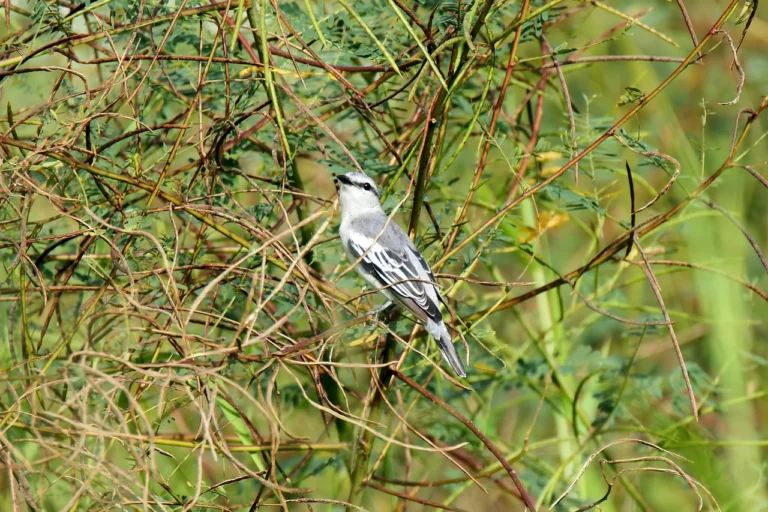
4. Mussau Triller (Lalage conjuncta)
Years Lost: 45 years (last seen in 1979)
Found Again: June 2024
Location: Mussau Island, Papua New Guinea
The Mussau Triller is a small, pretty bird with gray and white feathers. It hadn’t been seen since 1979. That’s 45 whole years of being completely missing.
In June 2024, a man named Joshua Bergmark was leading a bird-watching tour on Mussau Island when he managed to photograph this elusive bird. Finding it after so many years was a huge deal because nobody knew if it still existed. Now scientists know it’s still out there and can work on protecting its forest home.
5. Black-lored Waxbill (Estrilda nigriloris)
Years Lost: 73 years (last seen in 1950)
Found Again: September 2023
Location: Congo
This is a tiny, adorable bird that’s about the size of your thumb. It has a black mask around its eyes (that’s what “black-lored” means) and pretty brown feathers.
In September 2023, a photographer named Manuel Weber was out taking pictures in the Congo when he captured photos of this little bird. He couldn’t believe what he was seeing. His photographs were so important that they were published in a scientific journal in December 2024. After 73 years of nobody seeing this bird, one person with a camera changed everything.
6. Vilcabamba Inca (Coeligena vilcabambae)
Years Lost: Nearly 60 years
Found Again: August 2024
Location: Vilcabamba Mountains, Peru
The Vilcabamba Inca is a large hummingbird with a straight bill (not curved like many hummingbirds). It’s named after the Vilcabamba Mountains in Peru, where it lives high up in the misty cloud forests.
A woman named Carole Turek is on a mission to photograph every single hummingbird species in the world. When she heard about the lost Vilcabamba Inca, she knew she had to try finding it. In August 2024, she hiked through thick vegetation and fog in the mountains of Peru. And guess what? She got the first-ever photographs and video of this bird. It had been missing for almost 60 years, and now, thanks to her, we have proof it still exists.
Why Should We Care About Finding Lost Birds?
You might think, “Why does it matter if we find these birds?” Well, it matters a lot! Here’s why:
Every Species Is Important
Each bird plays a special role in nature. They spread seeds, pollinate flowers, control insects, and help forests stay healthy. When a species disappears, it’s like removing a piece from a puzzle. The whole picture becomes less complete.
They Show Us What Needs Protection
Finding lost birds tells scientists which forests and habitats are still wild enough to support rare species. These places need to be protected from being destroyed.
It Gives Us Hope
When a bird that’s been missing for 140 years suddenly shows up again, it proves that not everything is lost. Even when things seem impossible, nature can surprise us in amazing ways.
We Can Save Them
Once we know a lost bird still exists and where it lives, we can take action to protect it. We can stop logging in their forests, create nature reserves, and help local communities protect these special places.
They’re Part of Our World’s Treasure
Every bird species is unique and took millions of years to evolve. Losing them would mean losing something we can never get back. They’re like living pieces of art created by nature.
Final Words
Lost birds are like nature’s hidden treasures waiting to be discovered. Every time scientists find one that’s been missing for decades, or even more than a century, it reminds us that our planet still has mysteries and wonders we haven’t explored yet. These rediscoveries give us hope and show us that with patience, technology, help from local communities, and a lot of determination, we can find species we thought might be gone forever.
Frequently Asked Questions (FAQs)
1. How many lost birds are there in the world right now?
As of 2025, there are about 122 bird species on the official lost birds list. These are birds that haven’t been documented for at least 10 years. Since 2022, 14 lost birds have been found again.
2. What’s the difference between a lost bird and an extinct bird?
A lost bird is one that scientists haven’t seen in a while, but it might still be alive somewhere. An extinct bird is completely gone. The last one has died, and there are none left anywhere in the world.
3. Who was the longest “lost” bird ever found?
The Black-naped Pheasant-Pigeon holds the record. It was missing for 140 years. The last scientific documentation was in 1882, and it wasn’t seen again until 2022.
4. Can regular people help find lost birds, or is it only for scientists?
Yes, they can. Many recent rediscoveries have been made by regular bird watchers and photographers. You can use apps like eBird and iNaturalist to report bird sightings, and scientists check these apps regularly for clues.
5. What happens after a lost bird is rediscovered?
Scientists study the bird’s behavior, habitat, and population to understand how to protect it. They work with local communities and governments to protect the birds’ home from threats like logging and development.